Libero Mail Down and the Great Email Seizure: How HTML2POP3 Made History

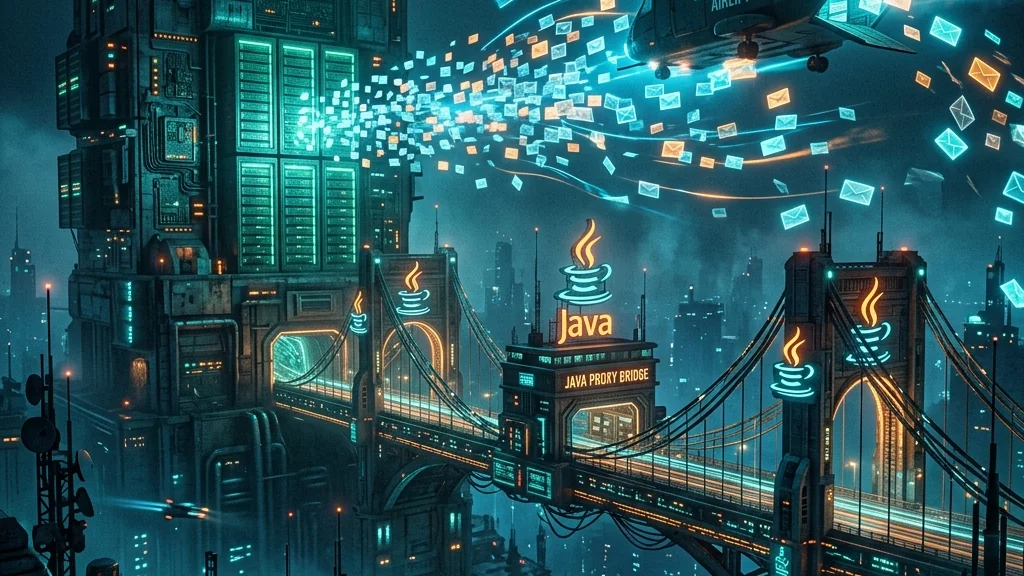
There is a date that every Italian netizen with a few gray hairs remembers as the beginning of the "telecommunications cold war": October 20, 2003. On that day, Libero.it decided to lock down its borders, decreeing that anyone who didn't connect through their telephone line would no longer be able to download their email using traditional clients like Outlook Express or Eudora. From one moment to the next, millions of Italians found themselves with house keys that no longer opened their own doors. But just like in 1948 in Berlin, when a land blockade was bypassed by a monumental airlift, a solution was born in 2003 to fly data right over the digital wall: HTML2POP3.
Anyone who lived through the era of 56k dial-up modems—with that characteristic metallic screech that sounded like the death rattle of a short-circuited robot—knows all too well that an internet connection was never a given. It was a ritual. You counted the minutes, waited for 6:30 PM for the off-peak rate, and prayed that no one in the house would pick up the landline phone, abruptly cutting off your download of a whopping 3 Megabyte MP3 file.
In this landscape, email was the center of everything. There was no WhatsApp, no Slack. There was only email. And for the vast majority of Italians, that email ended with @libero.it, @inwind.it, or @iol.it.
Then, suddenly, the embargo arrived.
"Dear customer, starting October 20, POP3/IMAP access will only be available to customers using an Infostrada or Wind connection..."
Translated into plain cash: you either paid for the premium "Libero Mail Plus" subscription, changed your phone provider to Wind, or you were condemned to use their webmail interface. A webmail interface that, at the time of pay-per-minute connections, meant wasting fifteen minutes just loading advertising banners before you could even read a three-line text message.
To paraphrase a classic Italian comedy character like the tragic clerk Ugo Fantozzi in one of his moments of supreme realization:
"After three minutes of failed connection attempts, the user saw the Outlook error, became slightly unsettled—or rather, mad as a hornet. Wait a minute, they've taken my email hostage!"
Yes, it was a literal digital hostage situation. But in the computing world of the early 2000s, rules were written to be tested. And this is where my personal story intersected with that of nearly one million Italians.
The "Airlift" of E-mails
In 1948, when the Soviet Union blocked all land access to West Berlin, leaving the city without food or electricity, the Allies didn't surrender. Instead, they organized the Berlin Airlift: for nearly a year, hundreds of planes flew over the blockade, landing every few seconds to resupply the city.
In my own small way, on the evening of October 20, 2003, I felt a bit like those pilots. I couldn't accept that my mailbox had become a commercial hostage. My connection was Telecom Italia (the glorious Alice ADSL), and I had absolutely no intention of changing it, nor did I want to pay an unjustified fee for a service that had always been free.
The solution wasn't in the Gurùs manuals. There were no "best practices" written by some Silicon Valley architect to solve a local Italian monopoly. There was only the engineering of the possible: if Libero only allowed reading emails through a web browser, then I would have to build something that pretended to be a browser, read the mail for me, and handed it back to my Outlook Express via a standard protocol.
Thus, the first line of code of HTML2POP3 was born.
The idea was disarmingly simple, yet devilishly effective: create a local proxy (a software running on your own PC) that listens on port 110 (the standard POP3 port). When Outlook requested email from 127.0.0.1 (the local PC):
1. HTML2POP3 intercepted the request.
2. It opened a silent HTTP connection to the Libero webmail.
3. It logged in, simulating in every way a user browsing with Internet Explorer.
4. It downloaded the HTML of the web page containing the list of emails.
5. It parsed the HTML (which back then was a mess of nested tables and not-so-clean code) using regular expressions to extract the sender, subject, and body of the message.
6. It repackaged everything into the standard POP3 format and served it on a silver platter to the email client.
It was a digital airlift. The emails flew right over Liberòs network blockade, transported in HTTP cargo holds and unloaded directly onto the user client's runway.
The Anatomy of a Trench in Java
Writing HTML2POP3 was not an exercise in style. Those who program today using Copilot or Claude, receiving flawless code in three seconds, cannot understand what it meant to reverse-engineer a webmail system in 2003.
Liberòs web interface changed constantly. It only took a web designer deciding to move a <table> tag or change the name of a button from "Send" to "Submit" to bring the whole house of cards crashing down. The HTML2POP3 logs would fill with incomprehensible errors, and my inbox would be flooded with reports from desperate users who could no longer download their invoices or work emails.
It was a war of attrition. Libero modified the webmail code to lock out "outsiders," and I spent my nights adjusting regular expressions to restore the flow. There were no modern frameworks, no Node.js. It was pure, raw Java—heavy, but incredibly portable. It worked on Windows, Mac, and Linux.
// A snippet like this, today, would make any Clean Code purist's eyes bleed:
Pattern pattern = Pattern.compile("<tr class=\"msg\">(.*?)</tr>", Pattern.DOTALL);
Matcher matcher = pattern.matcher(htmlWebmail);
while (matcher.find()) {
    // Artisanal data extraction in the middle of legacy HTML mud
    String row = matcher.group(1);
    String id = parseMessageId(row);
    String subject = parseSubject(row);
    // ... and so on, toward freedom
}
But you know what? It worked. And not only did it work, it consumed very few resources. In an era when a PC with 256MB of RAM was considered a decent machine, HTML2POP3 ran in the background without the user noticing the slightest slowdown.
One Million Downloads in the Era of SourceForge
Word spread quickly. In the early 2000s, there were no social networks to act as megaphones. There were technical forums (like the legendary HWUpgrade), Usenet newsgroups (it.comp.software.mail), and office word-of-mouth.
HTML2POP3 was uploaded to SourceForge and, within a few months, became one of the most downloaded Italian software programs of all time, closing in on the milestone of one million downloads.
Every time Libero introduced a new block, a CAPTCHA, or decided to upgrade security certificates to 2048-bit (which older versions of Java 6 couldn't handle, forcing me to insert alert boxes urging users to upgrade), the HTML2POP3 organizational machine responded.
It was a concrete demonstration that spontaneous cooperation and open source could disrupt the unilateral decisions of telecom giants. If a service provider decided to strip away a technological freedom for profit, the community replied with silicon and code.
From the 2023 Blackout to Today: The Lesson of Open Standards
Let's fast forward in time. January 2023: Libero Mail and Virgilio Mail go completely down for almost a week. Millions of accounts remain inaccessible. Businesses paralyzed, professionals unable to receive contracts, private citizens isolated from the world. History repeated itself just a few months later, in June of the same year.
During those days of collective panic, many rediscovered a truth that thirty years of technological evolution had partially obscured: entrusting your entire digital identity to a single proprietary walled garden is an enormous risk.
When you use a closed webmail system, you do not own your data. You are a guest. And if the host decides to close the door (whether due to a technical glitch or a business decision), you are left out in the cold.
HTML2POP3 was not just a tool to avoid paying a subscription fee or changing phone operators. It was a technological manifesto. It asserted that emails belong to users and that open standards (POP3, IMAP, SMTP) are the democratic tracks on which information must run. Using a local client (like Thunderbird or Outlook) means physically owning your emails on your hard drive, making you immune to server blackouts and letting you keep control of your digital history.
Today, the development of HTML2POP3 has migrated to GitHub, now in its Version 3, completely rewritten and ready for anyone who still wants to use it or contribute. It no longer has the astronomical numbers of 2003, because the market has changed and providers have (mostly) realized that blocking standard protocols is a battle lost from the start.
But the legacy remains intact. Every time you read news of a "Mail Down," remember that behind the convenience of a pre-packaged web interface, there is always an invisible cage. And sometimes, to find your freedom again, all it takes is a small airlift written in Java.
If you enjoyed this trip down early 2000s computing memory lane, leave a star on the official HTML2POP3 repository on GitHub. And remember: resistance to technological limitations is never useless.